Corporate | Global
We are Shaping the Future!Showcasing Success Stories as We Innovate for a Sustainable Tomorrow
In strategic business discussions, India is often viewed through the lens of scale: a population projected to reach approximately 1.48 billion in 2026*1, a vast consumer market, and one of the world’s largest economies. But scale is only the tip of the iceberg. The deeper opportunity lies in the breadth and diversity of India’s growth.
The country sits at the intersection of several powerful forces shaping the future: a growing economy driven by strong domestic demand and rising consumption; a rapidly expanding manufacturing base; a young workforce facing emerging skills constraints; accelerating automation; a significant burden of lifestyle-related diseases alongside a rapidly ageing population*2; a healthcare system evolving from a predominantly treatment-led model towards prevention and connected care; and a policy environment actively encouraging domestic manufacturing, R&D and technology adoption. Few markets bring together so many structural growth opportunities at such speed and scale.
*1 United Nations, Department of Economic and Social Affairs, Population Division, World Population Prospects 2024 (2026 population projection). https://population.un.org/wpp/
*2 UNFPA in India https://india.unfpa.org/en/publications/caring-our-elders-institutional-responses-india-ageing-report-2023
From supporting a growing manufacturing base with automation and sensing technologies to responding to the evolving needs of healthcare, OMRON continues to deepen its role in creating value for businesses and people across India. By anticipating and adapting to India’s evolving dynamics and business needs, the company’s journey in the country over the past three decades has unfolded alongside its transformation. It started its automation business in the country in 1996 and healthcare in 2010.
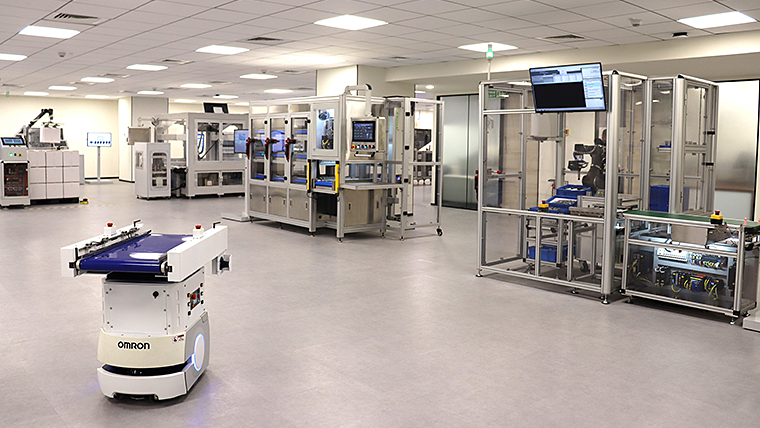 OMRON Automation Centre at Bengaluru
In 2006, OMRON established OMRON Automation Pvt. Ltd., marking its full-scale entry into India's factory-automation market. At the time, the company identified the country's rapidly expanding economy and automotive industry as important drivers of factory-automation demand.
OMRON subsequently deepened its presence in India and, in 2014, opened its first Automation Center in the country in Mumbai—the fifth such facility globally at the time. In 2025, the facility was given a new avatar and relocated to Bengaluru, reflecting the growing importance of the region as a hub for technology, innovation and advanced manufacturing. Since commencing business in India in 1996, OMRON has steadily expanded its presence across the country, building a strong position in the industrial automation sector.
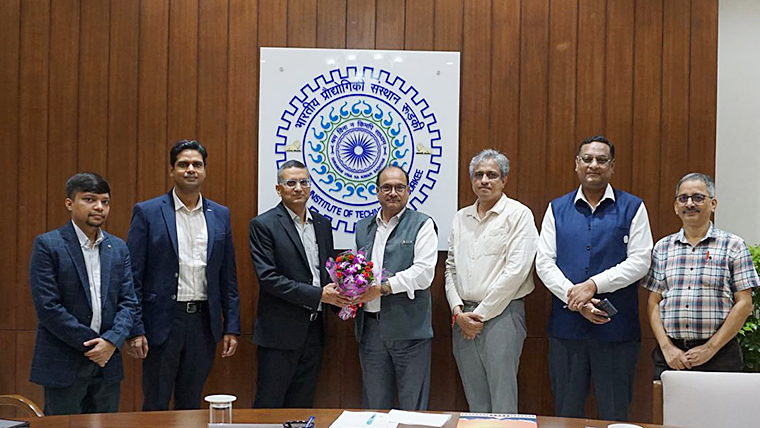 OMRON and IIT Roorkee Join Hands to Strengthen Industry – Academia Collaboration
This evolution mirrors the transformation underway in India’s manufacturing landscape, as companies increasingly embrace automation, digitalization and intelligent technologies to build more productive, resilient and future-ready operations.
As India strives to increase the manufacturing sector’s contribution to GDP and deepen its participation in global supply chains, its vision seems to be moving from a low-cost manufacturing proposition towards higher-value and technology-intensive manufacturing destination.
This shift is already underway. Medium- and high-technology activities now account for 46.3% of India’s manufacturing value added (Government of India’s Economic Survey 2025–26), highlighting the growing role of technology and advanced manufacturing in the country’s industrial development.
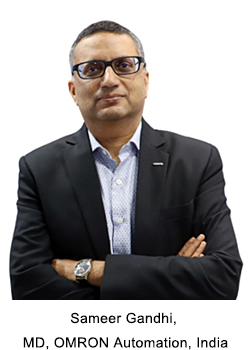
As per Sameer Gandhi, MD, OMRON Automation, India, “India's manufacturing opportunity is not simply about building more factories. It is about making those factories globally competitive. Industrial automation is central to that equation as it plays a pivotal role by enhancing productivity, global competitiveness, and sustainability.”
Apart from expanding its presence, OMRON's opportunity in India is increasingly moving from selling products to solving manufacturing problems with an end-to-end solutions approach—from individual automation products towards integrated solutions, digitalisation and GEMBA DX.
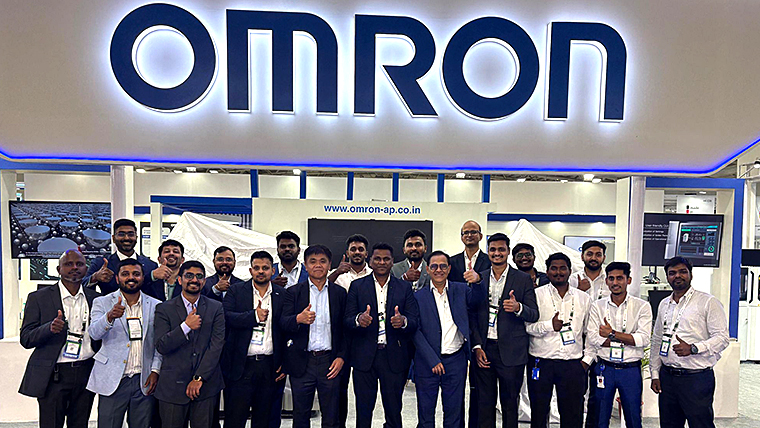 Team OMRON
India’s healthcare landscape presents both a pressing challenge and a significant opportunity. With a population aged 65 and above expected to more than double (from around 103 million in 2024 to 246 million) by 2050, there seems to be a potential increase in demand for accessible and timely healthcare.*3
At the same time, non-communicable diseases are placing enormous pressure on the healthcare system. Cardiovascular disease remains one of India’s leading health challenges including the rising number of hypertensive patients. Ischemic heart disease and stroke are among the country’s major causes of death.
Addressing these challenges requires continuous blood pressure monitoring at home—capturing changes over time and enabling earlier detection.
*3 India Population 2025 - United Nations Population Fund | United Nations Population Fund
OMRON Healthcare has been playing an important role in raising awareness of the importance of home blood pressure monitoring and supporting its adoption through health camps, patient education initiatives and engagement with medical professionals and key opinion leaders (KOLs). In recent years, the company is advancing towards providing a more accessible, preventive and connected approach to cardiovascular healthcare.
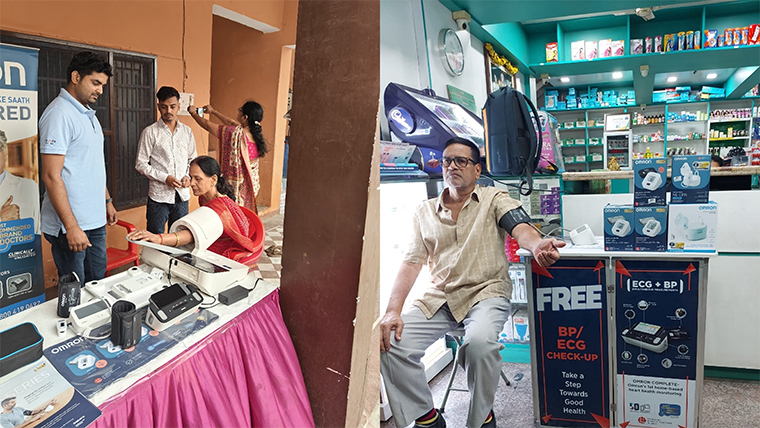 OMRON Healthcare India BP and ECG Camp
A step in this direction came in 2023, when OMRON partnered with Tricog Health to launch a remote monitoring service for cardiovascular diagnostic support, combining AI-powered analysis with ECG data. In 2026, OMRON introduced a cloud-based service that uses Tricog's AI to analyse ECG data from its BP monitors with built-in ECG.
Through research examining physicians’ understanding and use of home BP monitoring, alongside patient education and healthcare partnerships, the company has also contributed to efforts to integrate regular home measurement guidelines into hypertension management.
The vision, therefore, is not just to participate in India's growth. It is to help shape what that growth looks like—more globally competitive factories, more connected preventive healthcare and, ultimately, better outcomes for the people. That makes India more than a market in OMRON's global portfolio.
It makes India a potential growth engine for OMRON's next chapter.