Audit & Supervisory Board
■Member of the CEO Selection Advisory Committee ■Member of the Personnel Advisory Committee
■Member of the Compensation Advisory Committee ■Member of the Corporate Governance Committee
C=Chairperson VC=Vice Chairperson
Audit & Supervisory Board Members
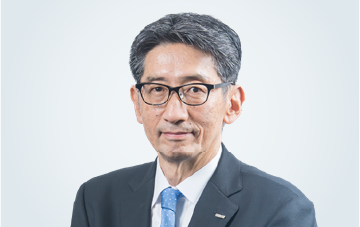 Toshio Hosoi
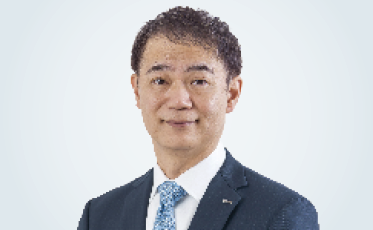 Hiroto Iwasa
Outside Audit & Supervisory Board Members
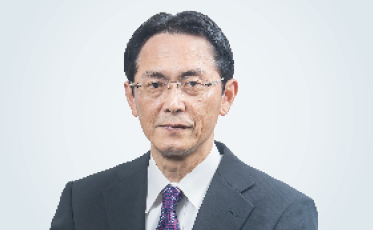 Hiroshi Miura
 Yumiko Ichige
Roles and Responsibilities
Audit & Supervisory Board bears in mind its fiduciary responsibility to shareholders and works to secure the integrity of the OMRON Group toward sustainable enhancement of corporate value, and acts for the common interests of the shareholders. To fulfill the above-mentioned responsibility, Audit & Supervisory Board strives to develop a system to ensure effectiveness of audits conducted by each of its members. Audit & Supervisory Board works in collaboration with independent outside directors and the internal auditing department. Audit & Supervisory Board also exchanges views with independent outside directors and provides them with information acquired through auditing.
Meeting Attendance
In order to make sure that the Board of Directors effectively fulfill its roles and responsibilities, all Directors and Audit & Supervisory Board members are required to maintain the target attendance rate of 75% or higher.
The meeting attendance for fiscal 2024 is as follows.
| Position |
Name |
Attendance |
| Audit & Supervisory Board Member |
Shuji Tamaki |
100%(13/13 times) |
| Audit & Supervisory Board Member |
Toshio Hosoi |
100%(13/13 times) |
| Outside Audit & Supervisory Board Member |
Tadashi Kunihiro |
100%(13/13 times) |
| Outside Audit & Supervisory Board Member |
Hiroshi Miura |
100%(9/9 times) |
| Outside Audit & Supervisory Board Member |
Hideyo Uchiyama |
100%(4/4 times) |
(Note)At the conclusion of the 87th Ordinary General Meeting of Shareholders held on June 20, 2024, Hideyo Uchiyama retired from his position as Audit & Supervisory Board Member and Hiroshi Miura was newly elected and appointed as Audit & Supervisory Board Member at the same meeting.
Composition
To effectively fulfill its duties and responsibilities, Audit & Supervisory Board is composed of members with experience, specialized knowledge, and deep insight in a well-balanced manner.
Principles of Conduct for OMRON Audit & Supervisory Board Members
Audit & Supervisory Board Members shall strive for self-improvement, be trustworthy at all times, uphold high ethical standards, and conduct themselves with humility.
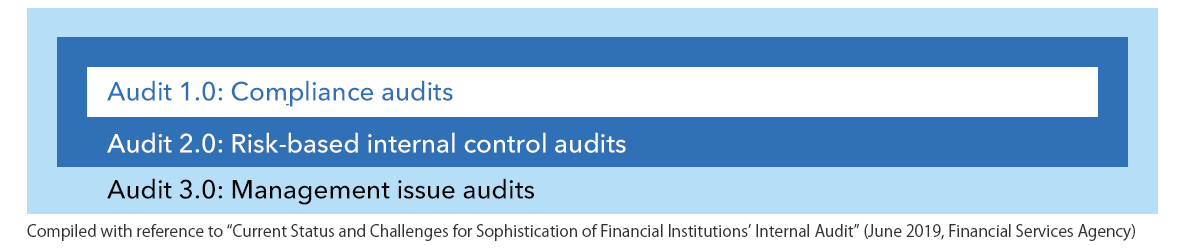
- We not only conduct compliance audits (Audit 1.0) and point out deficiencies; but also conduct risk-based/internal control audits (Audit 2.0) and state our views; and conduct management issue audits (Audit 3.0) and provide advice.
- We emphasize listening attentively, dialogue, and empathy,
(1) Ask questions with curiosity and discuss freely and openly.
(2) Express opinions vigorously, including harsh ones, and be persistent.
(3) Strive for objective, fair, and impartial discussion and opinions based on data and evidence.
- In the spirit of "throwing stones to make waves," we question conventional wisdom inside OMRON from diverse perspectives, including those of stakeholders.
(1) Insight into the true causes and issues, not just the surface of things
(2) An inquiring mind based on a healthy skepticism that does not accept the status quo
(3) Assumption that there are two sides to everything (light and shade)
- We promote behavioral changes in management that will enable future-oriented, transparent, fair, swift, and decisive decision-making.
Initiatives to increase the Audit & Supervisory Board effectiveness
- Overview of the initiatives
To fulfill the responsibilities entrusted by stakeholders and to achieve sustained enhancement of corporate value, the Audit & Supervisory Board conducts audits as it consistently discusses how the auditing activities should be in OMRON.
While deepening compliance audits* and risk-based internal control audits,* the Audit & Supervisory Board also includes management issues within its audit scope.
* OMRON Audit & Supervisory Board refers to compliance audits, risk-based internal control audits, and management issue audits as Audit 1.0, Audit 2.0, and Audit 3.0, respectively.
Framework of Audit 3.0
- Evaluation of the effectiveness
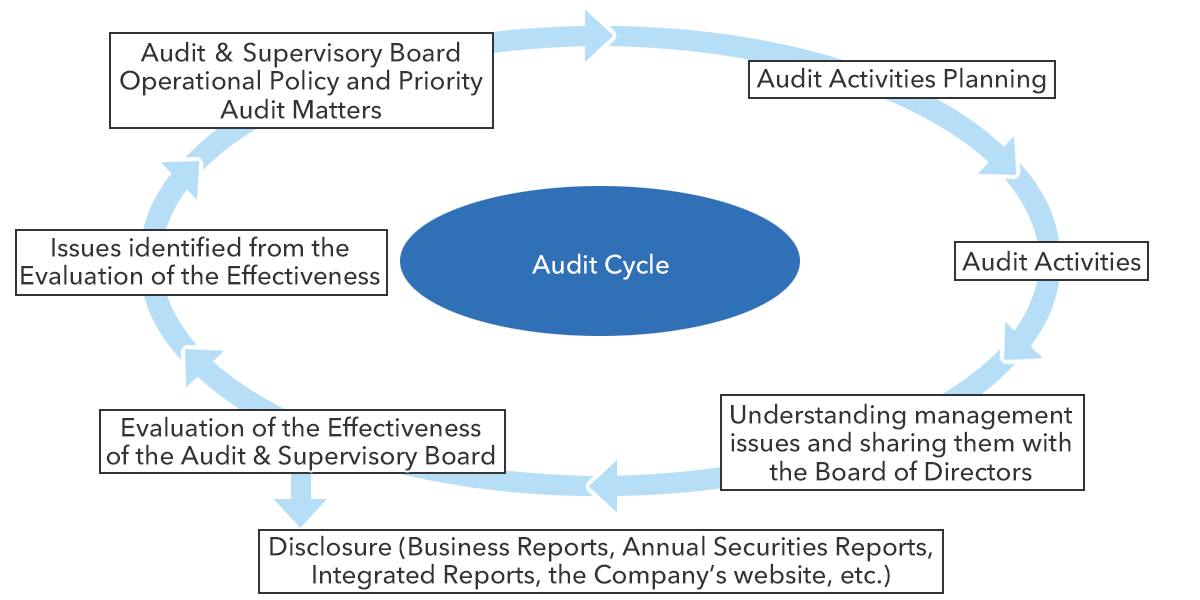
(1) Cycle of Audit Activities and Evaluation of Effectiveness
The Audit & Supervisory Board is working to enhance the effectiveness of the Audit & Supervisory Board Members by sharing and discussing management issues that each Audit & Supervisory Board member has identified through its annual activities and making recommendations to the Board of Directors. The effectiveness of these measures is evaluated at the end of the fiscal year.
Based on the evaluation results, the Audit & Supervisory Board formulates policies, priority audit items, and audit plans for the next fiscal year. In addition to the annual securities report, the evaluation results are also actively disclosed, such as in business reports, integrated reports, and on the Company's website.
(2) Results of the Audit & Supervisory Board's Effectiveness Evaluation
The Audit & Supervisory Board deepened compliance audits (Audit 1.0) and risk-based internal control audits (Audit 2.0), as well as actively audited areas of management issues (Audit 3.0) to evaluate the effectiveness of its activities from a more multifaceted and objective perspective.
The evaluation was conducted using the "Questionnaire for Audit & Supervisory Board Members," the "Evaluation Sheet for Contribution to Improving Corporate Value," and the "Audit Implementation Report for 2024." In addition, as in the previous fiscal year, the Audit & Supervisory Board Members received opinions from Directors and used them as references.
The "Evaluation Sheet for Contribution to Improving Corporate Value" is an original initiative of the Audit & Supervisory Board, which qualitatively analyzes statements made by Audit & Supervisory Board Members and determines the degree of contribution to the improvement of corporate value through the activities of the Audit & Supervisory Board. Specifically, we confirmed whether the activities of the Audit & Supervisory Board are contributing to the enhancement of corporate value in the following five stages for priority audit items. (1) Grasp the facts and data (2) Opinion of the Audit & Supervisory Board (3) Hypothesis development by the Audit & Supervisory Board (4) Discussion and recognition sharing at the Board of Directors meetings (5) Confirmation of the status of execution.
For more information, see the following documents.