
Corporate | Global
We are Shaping the Future!Showcasing Success Stories as We Innovate for a Sustainable Tomorrow
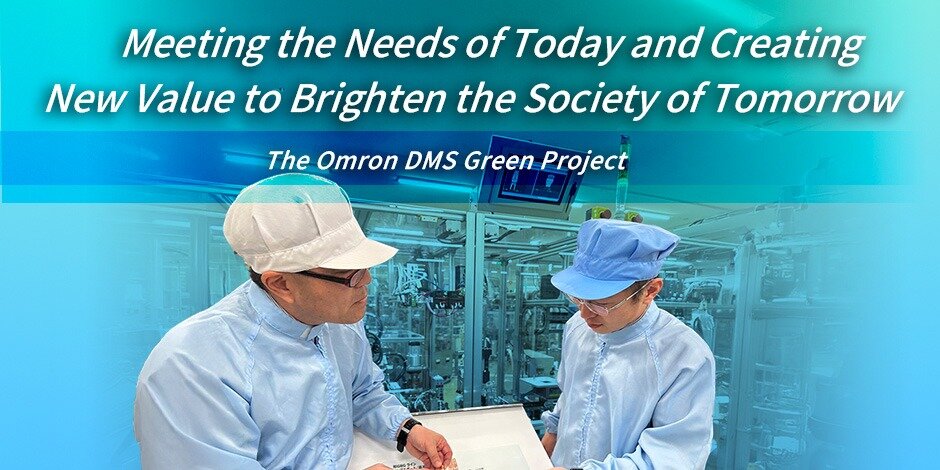
Around the world today, the push for decarbonization is accelerating, becoming an irreversible tide which is transforming manufacturing on a global scale. Japan has set the lofty goal of net-zero greenhouse gas emissions by 2050, and in moving towards that goal, it aims to reduce emissions by 60% from its FY2013 levels by FY2035, and by 73% by FY2040. China has set its "Dual Carbon" targets (peaking carbon emissions before 2030 and achieving carbon neutrality before 2060) and is accelerating structural transformation across industries to support this transition. Taking the lead in this movement, the EU is implementing even stricter environmental regulations.
Sources:
Government of Japan, Plan for Global Warming Countermeasures
The State Council Information Office of the People's Republic of China, Full Text: Carbon Peaking and Carbon Neutrality -- China's Plans and Solutions
In 2024, the EU Batteries Regulation mandated carbon footprint (CFP) declarations , which are designed to make carbon dioxide emissions transparent across a battery's lifecycle, from the procurement of raw materials through disposal and recycling, and to eliminate products that do not meet set standards from the marketplace. This move is intended to start a ripple effect that will soon impact all industrial products.
This means that it will soon be impossible to market products for which environmental data cannot be produced. What was once feared as a future hurdle is now becoming a concrete barrier. OMRON views this major change as an opportunity to work with our customers and society to create new value. OMRON Corporation Device & Module Solutions Company (hereafter, DMS) has launched its Green Project not merely as a way to deal with new regulations, but as a way to join forces with everyone involved in our supply chain as we strive to bring us all closer to a sustainable future.
In this article, we will hear from Kazuyuki Okada , who works on the front lines of this effort in DMS's Product Development Section, part of its Business Management Division , to learn about his thoughts and find out how far the project has come as of 2026.
 Kazuyuki Okada, Business Management Division, Product Development Section ,
Device & Module Solutions (DMS), OMRON Corporation
It was five years ago, in 2021, that OMRON's DMS Green Project was initiated.
At the time, both within the company and in the world at large, practical debates about environmentally friendly measures were rising, with people arguing that they would increase costs and make it hard to stay competitive. Yet as an enterprise dealing in electronic components that are essential to all sorts of instruments and devices, we felt we needed to lead the way in making changes. Transforming DMS would contribute to the decarbonization of our customers' products, and by extension, to society as a whole, eventually. Embracing this belief, we initiated the Green Project with a firm goal of making the transition faster and more broadly than anyone else.
At the core of this strategy lie the 3 Ps: Products, Processes and Purchases.
■The "3 Ps" of the DMS Green Project
Products
We offer products that contribute to the goal of carbon neutrality, aiming to reduce environmental impact starting from the design stage. For example, our low-heat-generating relay designs reduce the need for fans and heat sinks, while making our components more compact and longer lasting helps cut down on disposal loss.
Processes
In addition to the thorough energy-saving measures adopted at our factories, including improving the energy efficiency of our equipment and reducing energy loss, we are accelerating our adoption of renewable energy. Our goal is green manufacturing, with CO2 emissions during the production process (Scope 1 and 2) reduced.
Purchases
Not only are we striving to reduce environmentally hazardous substances in raw materials, but in our attempts to reduce our carbon footprint, we are endeavoring to be transparent about emissions throughout the supply chain. In collaboration with our suppliers, we are aiming for low carbonization of our entire procurement process.
One of the measures we have focused on in carrying out our Green Project has been the carbon footprint (CFP) quantification of our purchases. In the above photo, Mr. Okada is shown holding a G9KB high-capacity power relay , which is one of OMRON's mainstay products developed for use in renewable energy equipment such as solar panels and power storage systems. It was the first OMRON product designed with CFP compliance in mind.
Since then, the proportion of CFP-compliant DMS products has risen rapidly and projections are that we will reach a rate of 90% CFP compliance on products for the EU in FY2027.
However, before we could reach this point, our efforts at global expansion ran into a maze of differing rules. Mr. Okada explained that even though the rules for CFP quantification are stipulated in international provisions, there are subtle differences in the way they are interpreted by different countries and inspection agencies. "We therefore had to go through a slow but steady process of expansion in which we needed to repeatedly make precise adjustments in our operations at each factory to align production with the rules in that country", he said.
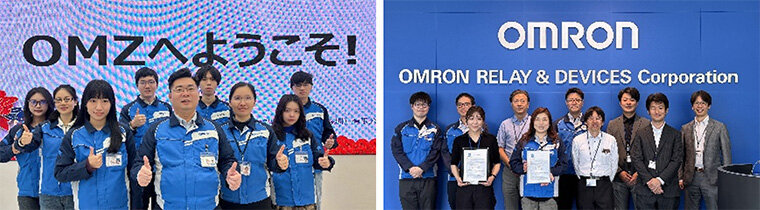 Project members involved in developing OMRON's CFP quantification system
Left: OMRON Electronic Components (Shenzhen) Ltd. (China) /
Right: OMRON Relay and Devices Corporation (Japan)
The first site to begin work on developing OMRON's CFP quantification system was the Shenzhen factory in China. They began work in 2023. Thereafter, we initiated dialogue with the local inspection agencies for each production site and proceeded to adopt and run a system in line with the country's rules. We finished putting a system in place at two sites in Japan in 2024, and then went on to expand to the Shanghai plant in China, as well as to our factories in Indonesia and Malaysia in 2025. We plan to establish CFP quantification systems at all DMS Group production sites within FY2026.
In this way, we are steadily moving forward with plans for CFP quantification, and currently have five models that have earned third-party assurance for CFP. However, it takes substantial resources to not only calculate this data, but also to arrange for testing by a third party and then manage the data and keep it updated thereafter. Our policy prioritizes obtaining CFP certification for major products and key models.
This is why we adopted an approach which is based on establishing the logic of quantification and expanding the number of products that comply with these standards. First, we established the correct quantification logic based on the international standard (laid out in ISO 14067 ). We then had the main models with the highest demand from clients tested for third-party assurance; then, using this recognized quantification method to appraise our other products internally, we designated these models as "CFP compliant."
In FY2025, there were 34 DMS products that were CFP compliant, including those which had earned third-party assurance and those designated internally as CFP compliant; in FY2026, we plan to expand this to 66 models. Mr. Okada explained that arrangements have been made so that third-party assurance can be obtained at any time and actual CFP quantifications can be provided immediately if customers ask for them. This is our approach to transform regulations into competitive strength.
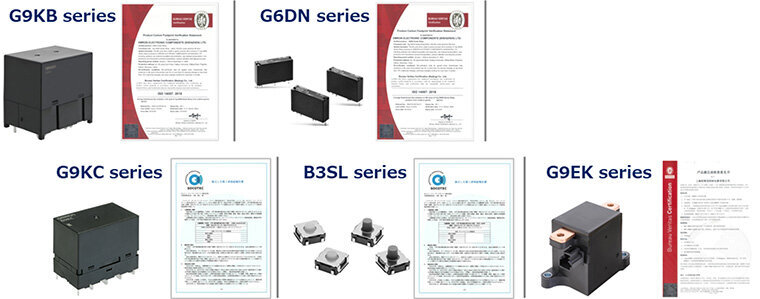 DMS products that have third-party assurance for CFP
It is impossible for a manufacturer to accurately measure CO2 emissions for component production on its own. Data quantification requires a great deal of labor on the part of the companies that supply the raw materials for the components we produce. As the party that is asking its suppliers to take on this burden, DMS has adopted a stance that sees them as "co-creators."
"We didn't just ask our suppliers to provide us with data; we shared the expertise we had gleaned and the tools we had developed to do the measurements with them. We wanted to help alleviate the burden we were putting on our partners, so that we could enhance our operations together," said Mr. Okada.
Making their own CO2 emissions visible could boost our partners' ability to make proposals to other companies. Our focus is on driving meaningful improvements for our customers, partners, and DMS. We believe that the traditional Ohmi merchants' spirit of making things "Good for the seller, good for the buyer and good for society" helps build a network of relationships that serves as the key to building a sustainable supply chain.
DMS itself will continue to work toward the highest goals. We have set a Scope 2 (greenhouse gas emissions from our corporate energy use) emissions goal of zero by FY2027 and we are working on a plan to reach it ahead of schedule.
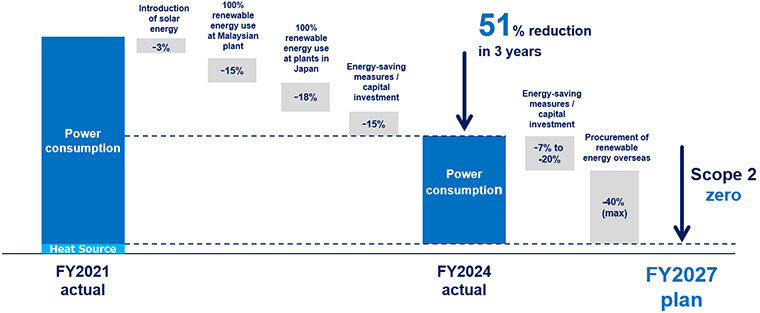 Roadmap to Reducing Greenhouse Gas Emissions to Achieve Zero Scope 2 Emissions
The above graph shows the roadmap illustrating how we have steadily reduced emissions from our energy use since FY2021, with a goal of zero Scope 2 emissions in FY2027. Mr. Okada explained, "DMS achieving zero Scope 2 emissions of greenhouse gases will, in and of itself, lead to reduced CO2 emissions during the production of our products; in other words, it will reduce our carbon footprint. This will directly translate into a higher environmental value for the products of customers who use OMRON components."
In Europe, adoption of the Digital Product Passport, which provides a digital record of the materials used to make the product, information about recycling it, as well as its CFP, is making headway. This type of regulation is already being applied to batteries and is expected to be extended to all electronic equipment around 2029. We are sparing no time or energy in preparing for that moment so that our products can serve as a strong selling point for them.
"We need to strive to get ahead of the rest of the world. As a manufacturer of electronic components, working to meet this goal will in turn lead to environmental value for our customers and for society as a whole," said Mr. Okada. What once appeared to be a high hurdle in addressing environmental issues is now becoming a challenge that can be overcome through the cooperation of everyone throughout our value chain.
Small electronic components transforming the vast future: OMRON DMS will continue to work together with our customers and partners to sincerely contribute towards the global challenge of decarbonization.


